

I’ve been a parent for six years. I’ve been in marketing for fourteen. The problem at my dinner table didn’t get solved by a parenting book. It got solved by something I learned while onboarding 1,200 clients.
But let’s go back to when I was six.
I’m sitting at the table. Ham steak, potatoes, and peas. My mom asks, “Colby, would you like some peas?”
“No, thank you.” I despised the bastards.
“They’re good for you,” she says, and plops a spoonful on my plate.
We had a rule: clean plates required. Whatever’s there, you finish it. My parents grew up with parents shaped by the Great Depression. I get it.
Everyone else finishes. No issue with peas for them. Me? An hour later, still sitting there. I asked for a glass of water. Permission granted. I dump the little green globules into the icy water and try to down it in one gulp.
Gag reflex. Peas all over the floor and tabletop.
The only time I escaped the clean plate club.
Now, fast forward to my house. Three kids under 7. Meal time is the main event.
Whining. Negotiating. Getting up from the table with no words. Bringing a toy back. Fighting over the toy. My wife and I trying to hold on with constant policing, watching food get wasted like an assembly line for the useless. Little dollar signs flying into the trash or my dog’s mouth.
I understand why my parents ran a dictatorship at meal time. I just don’t do it. Times change.
But I still haven’t accepted it. I’m not weak and everything is figure-out-able, right?
Here’s what I’ve done in the past:
Go to a parenting book
Watch a video
Ask my wife what she’s been researching
Outsourcing the problem to an expert in the field of getting your kids to just eat the damn food.
We’ve done that every handful of months for years. The techniques aren’t bad. They’d work for a day. Then the novelty would wear off. My oldest kid could spot the costume before I recognized I was wearing one. Soon, I’d be walking to the bathroom to apply some clown paint and cry.
Parenting books and videos are no enemy. But on the grand spectrum they skew more towards propaganda than utility. Every kid is different. Context matters a lot, and a book won’t have it for ya.
And it’s a cycle.
If you keep outsourcing to a “better” system, and that system doesn’t work, you’ll do it again. “It must not have been the right system,” you tell yourself.
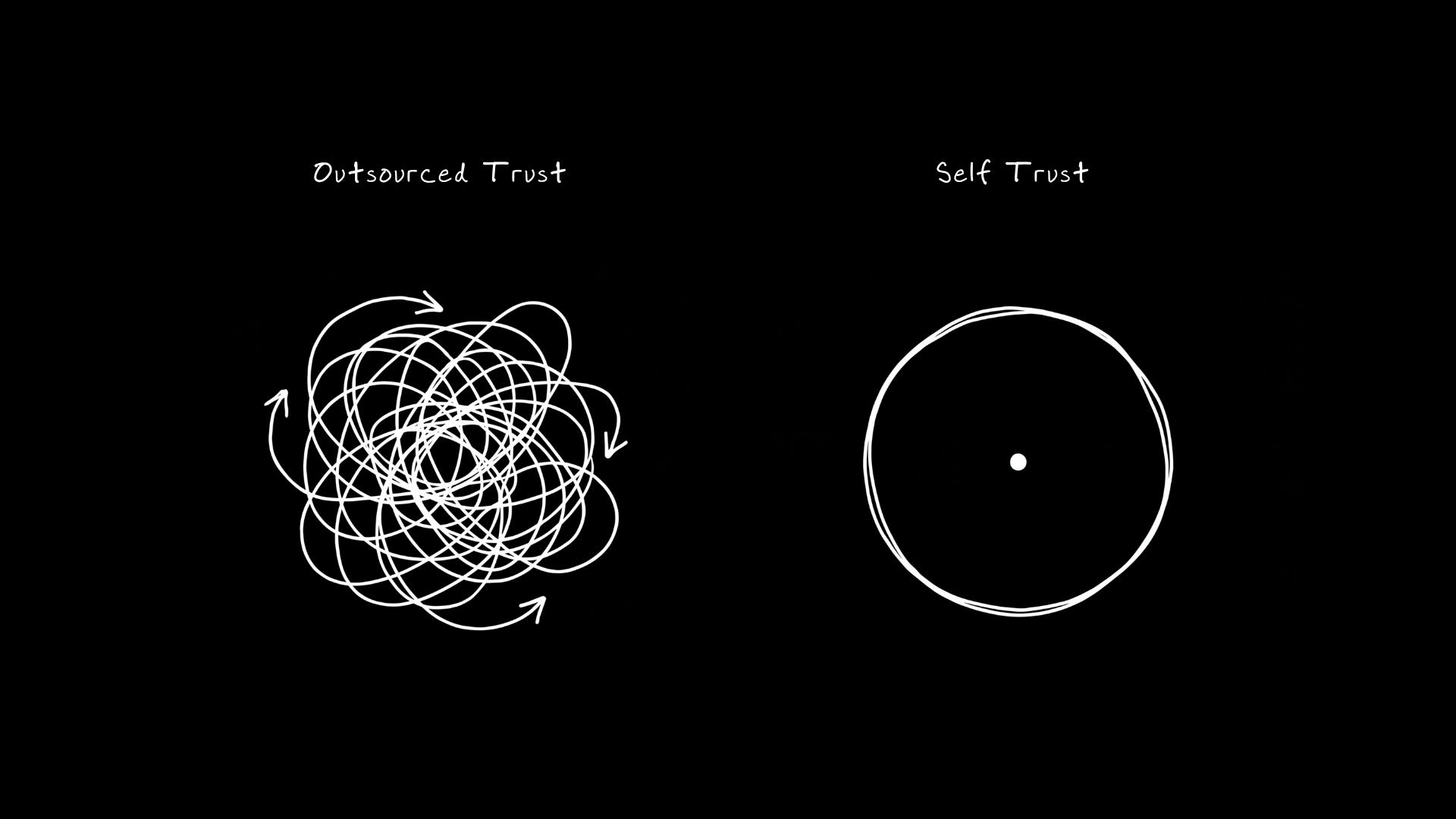
It was never the system. There’s no failure in trying to do the best for the kids. The failure lies in the idea that looking outward is the best play.
But meal time’s been pretty bangin’ the last two weeks.
And it didn’t take me long to realize I’d pulled from my existing knowledge to make it happen. From an unlikely place: how I used to onboard clients.
Turns out 14 years in marketing, nine of them running a globally recognized agency, 1,200 clients, and a client retention rate 11X the industry average could teach me how to tell the circus to leave town and restore some peace to my life.
What I’ll share for the rest of this essay works for kids, but it applies to any interaction where you need a clear path to a result in the simplest fashion.
Remember 90/8/2
Over that 14-year career, I’ve come up with my own ratio on what creates long-term trust and success between individuals, regardless of their personalities.
90% of any result comes from nailing the basics.
8% comes from collaboration. You can suggest, but both parties have to agree and believe.
2% comes from spontaneous magic. Only available if you’ve done the other 98% first.
The 90%: A Visual Model
I was so tired of endlessly policing. And the more I policed, the more I felt like I was repeating the cycle I experienced as a kid. An autocratic state that required clean plates. (Love ya, Mom and Dad. Zero shade. I get the approach.)
My kids are six and three. Every day of their lives they’re encountering visual models. Colors are the easiest ones.
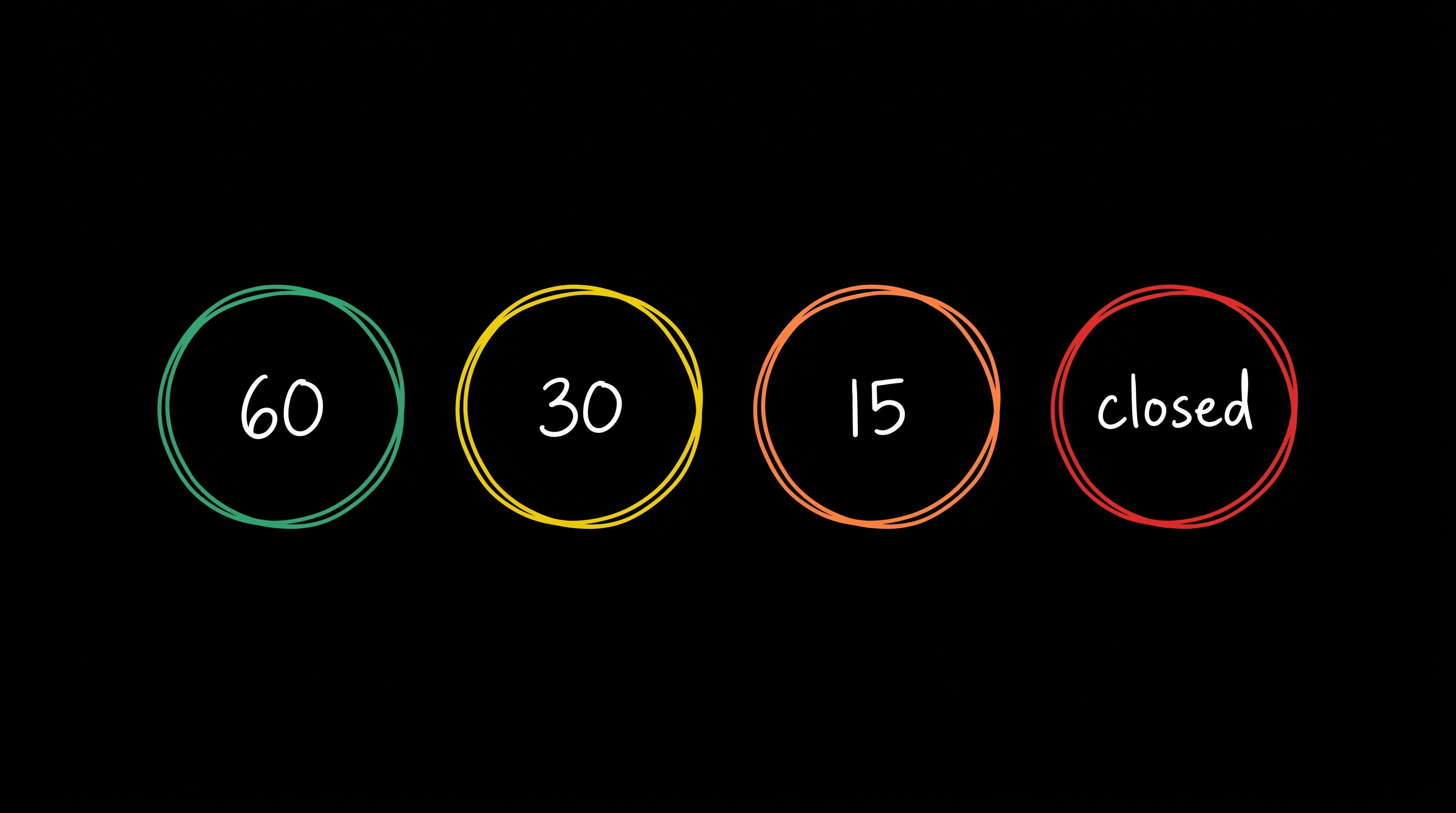
So I told my wife, “I’m thinking like a traffic light system. Let’s make meal time 60 minutes of free will with boundaries.”
She picked up on this half-brained idea quickly. Five minutes later, as all super moms do, she acted, cutting out green, yellow, and red circles about the size of a softball.
“Let’s add orange,” I said.
Ten minutes later, we’d taped up a green circle on the cupboard with the number 60 on it.
Yellow would be 30. Orange 15. Red meant the kitchen was closed.
We’ve all heard a picture is worth 1,000 words. This little traffic light system was the foundation stone for the whole thing.
Where there’s friction in your life or business, is there an absence of a visual model? No complex maps or Miro Boards. Keep it to 4 items or less.
When you add a visual model, you’ve removed every barrier to understanding. That’s the goal.
The 90%: Setting Expectations
There’s a reason I was able to keep clients a lot longer than anyone I was competing with. And it sure as hell wasn’t because I was smarter or more talented. I was in marketing for over a decade and to this day see myself as a pretty damn average marketer.
But what I’m a master at has served me in every facet of life: setting expectations.
Here are my rules:
Be honest, not clever.
Get as elementary in language as you can when expressing them.
Say them over and over and over (one expectation said hundreds of ways).
Demonstrate them often (What does “good” look like? What does “not good” look like?)
When you need to correct, frame it back to something solid (a contract... or in my case with the kids: a stoplight). This is why the visual model does so much heavy lifting for you.
The 8%: Collaboration
Expectations and a visual model can still lean autocratic. There’s gotta be meaning behind why they should agree to the expectations or it all falls apart.
Our expectation for the kids looked like this: “The kitchen is open for 60 minutes. These lights tell you how much longer it’s open for.”
Then, a direct incentive: “While the kitchen is open, you are free to come and go as you please. Two rules:
Do one thing (when you’re eating, you’re eating. When you’re playing, you’re playing.)
If the kitchen closes before your food is done, your consequence is being hungry.”
Freedom with bumpers. Two simple rules, a visual model, and constant reinforcement of the expectation.
They were gifted agency and autonomy. “Your time is your own. But the kitchen is only open for 60 minutes.”
And I got my wife on the same page. “Our job is to establish the boundary and enforce it. Their job is to push against it. Let’s just do our job well.“
We’ve been in the trenches long enough to know it’s easier to say these things than execute them. We gotta be allies.
Then, indirect incentivizing.
I told them they didn’t have to focus on the time. That’s my job. Every time we switch a color from green to yellow or yellow to orange, I grab my announcer voice: “The kitchen is closed in X minutes! If you don’t want to go hungry, you have X minutes to finish your food.”
And then I stacked: if everyone finishes with time left, you get to choose a bonus. Of course, they choose TV. Requirement: everyone has a clean plate.
As the days progressed, I whispered in their ears 1:1, “Hey, I’m so proud of you for taking your health seriously. It’s amazing you already finished with 40 minutes left! You can keep playing, but if you want a bonus, go cheer on your brother/sister to finish too! Then everyone gets some well-earned TV time.”
Food’s been getting devoured. Whining is going down. Policing transformed into simple time checks and nudges.
Peace, at last.

When you’re dealing with other people, are your friction moments coming from too much structure or too much freedom?
If they don’t feel like they have a say, they’ll rebel more. Freedom is a must. Just add some bumpers to avoid anarchy.
The 2%: Spontaneous Magic
Three days in, my son — who would negotiate everything and make me and my wife feel like short-order cooks — had a clean plate in the first 20 minutes. He heard the “15 minutes til the kitchen is closed!” time-check and asked for more food.
He’s six. Dude wants sugar all the time.
This time, he asked for an apple.
“I know I should have healthy food during mealtime,” he said.
That’s the 2%. The spontaneous magic that only shows up after you’ve done the other 98% first.
Instead of forcing peas down someone’s throat, we’re choosing apples willingly in 2026.
◬
P.S. If you want to watch the YouTube video that goes deeper on this concept, you can find it here:
It’s free. No spam. Unsubscribe whenever.